A self-initiated skunkworks project: I designed and shipped a live, 10+ screen skill marketplace for home robots in one afternoon, using AI to collapse the distance between idea and product.
Role: Concept, product strategy, UX/UI & build. Team: Solo · skunkworks.


Hardware is arriving; the platform layer isn’t.
Reading Peter Diamandis’s Abundance Summit recap, one line stuck: humanoid robotics is having a “Cambrian explosion.” NEO by 1X ships this year. The iPhone wasn’t just a phone. It was a platform, and the App Store created an economy. So where’s the App Store for your robot? Nobody had built it.
Think like a platform owner, then build at AI speed.
I treated it like a real product: who are the two sides of the marketplace, what earns trust when software controls a machine in your home, and what makes skills worth paying for. Then I skipped the deck and the static mockups and went straight to a working, deployed product, using AI tools to design and build in hours what used to take a team weeks.
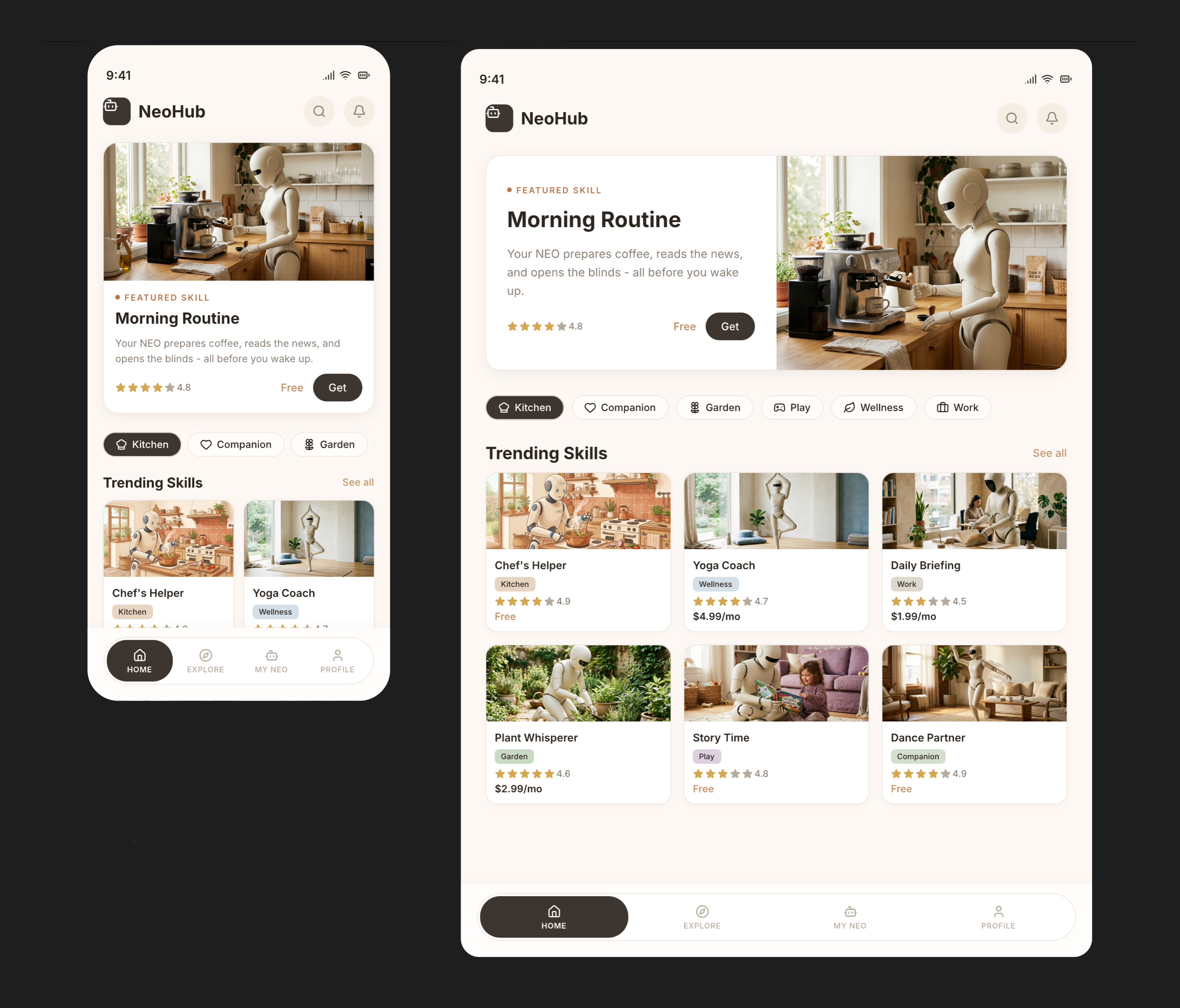
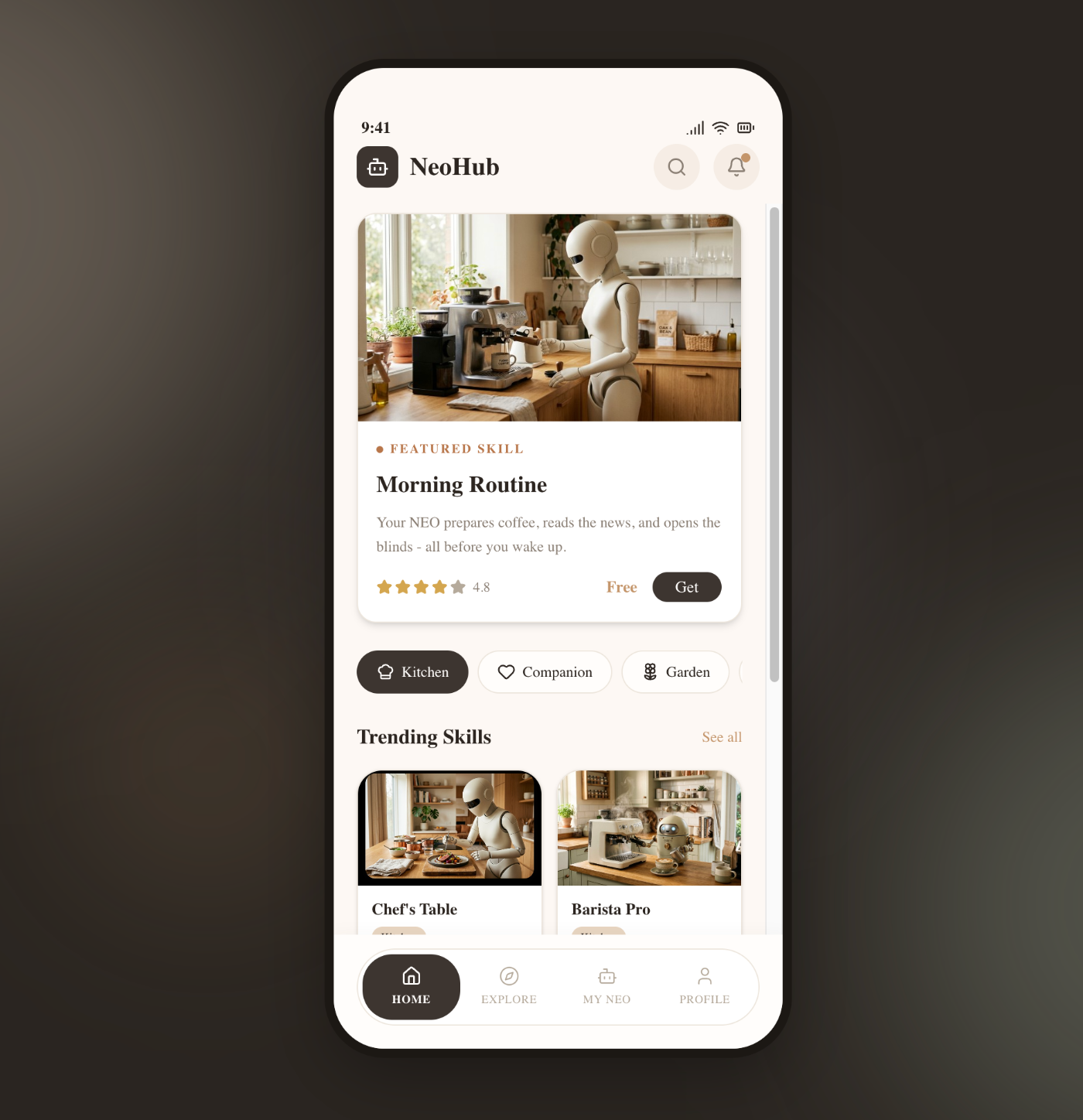
A warm, editorial store for robot skills: featured, trending and by room. Home leads with a featured skill (Morning Routine: coffee, news and blinds before you wake), category chips for Kitchen, Companion and Garden, and trending skills like Chef’s Table and Barista Pro.
Ratings, reviews and tiered pricing, from Michelin cooking to homework help. Each skill gets a detail page with ratings and reviews, tags, and free-to-premium tiers, so developers have a real business model. Chef’s Table is trained on techniques from Michelin-starred chefs; Homework Helper offers family plans with a parent dashboard.
Granular consent for software that moves around your home. Before install, each skill asks for exactly what it needs (kitchen sensors, pantry, dietary prefs, camera, voice), each toggle explained in plain language, with a clear data-stays-on-device promise.
Pause, locate or restart your robot and manage installed skills. Owners see their robot’s live status and mode, quick controls, and every installed skill with its plan and last use, each switchable on or off.
Proof the platform reaches beyond novelty, into everyday life. Homework Helper shows the platform’s range: patient, step-by-step tutoring with student, scholar and family tiers.
Ownership history, subscriptions and a timeline of what NEO did. A profile that ties it together: skills, subscriptions and purchases, plus an activity feed of installs, routines and updates.

Not a mockup. A live product.
NeoHub is deployed and clickable: a skill store, skill pages with reviews and pricing, permissions flows, a control center for your robot, and an owner profile. It’s a concrete argument for what a robot skill ecosystem could look like, and for how fast a senior designer with AI can turn a strategic idea into something people can touch. Try the live prototype.